There are moments when God draws near to us in an intentional way.
Scripture calls this a visitation.
It is not random.
It is not accidental.
It is God turning His attention toward us.
But what I began to see is this…
God can visit, and we can still miss it.
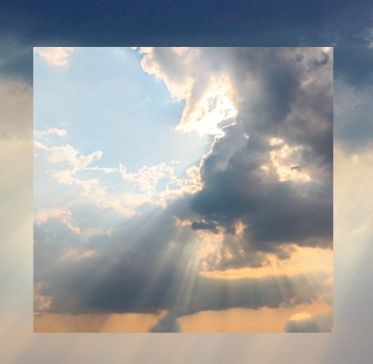
Today, my study was in Leviticus 26:9 where God says, “‘For I will look on you favorably and make you fruitful, multiply you and confirm My covenant with you.’” In this study, I pause to consider deeply what it means for God to look on us. I found that this is a VISITATION.
Jesus wept over Jerusalem because they did not recognize the time of their visitation.
Not because God didn’t come…
But because they didn’t discern that He had.
And that caused me to pause.
Because if we are asking God to look upon us,
What does that mean if He already is?

My first reference was Exodus 2:25, where God looked upon the Israelites and acknowledged them. Yet, in Exodus 4:31, we find that they did not know that there was a visitation until after the fact, when they heard about it.
The first place this led me was to Cain.
After sin entered, he said he would be hidden from the face of God.
And the result of that was a life of wandering.
No stability.
No dwelling.
No sense of place.
And suddenly Psalm 107 came alive.
It describes people who are:
- wandering
- hungry
- without rest
- with no city to dwell in
Not because God abandoned them…
But because they were out of alignment.
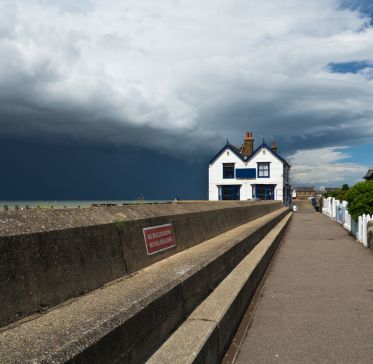
Disobedience to God and rebelliousness can position us to miss the blessing of experiencing the favor of God’s face looking on us. When that happens, and we find ourselves experiencing the storms of life, remember Psalm 107:6, that we can “cry out to the Lord” in our trouble and He will deliver us from our distress.
Then comes the turning point.
“Then they cried out…”
Not casually… but from a place of brokenness.
And God responded.
He delivered them.
But He didn’t just rescue them.

Psalm 107: 7 tells us, “He led them by a straight way to a city where they could settle.” (New King James Version)
He led them.
“He led them forth by the right way, that they might go to a city for a dwelling place.”
And that’s when it became clear to me…
That city is not a physical place.
It is a place of alignment.
A place of covering.
A place of belonging.
Trust the process.
Psalm 107 shows the journey.
Psalm 91 shows the result.
In Psalm 91, the person is no longer wandering.
They are dwelling.
Abiding.
Covered.

God tells us in Psalm 32:8, ” I will instruct you and teach you in the way you should go. I will counsel you with my loving eye on you. (New King James Version)
And this is where it deepened for me.
God does not visit us just to rescue us…
He visits to bring us into a place of dwelling.
And that dwelling is established through entering into a covenant relationship with God.
Covenant brings:
- stability
- identity
- covering
- order

1 Samuel chapter 4 and 2 Samuel chapter 6 give us two perspectives of the Ark of the Covenant. In the first view, God had removed His presence, which enabled the Philistines to capture the Ark. In the second view, God’s presence was again upon the Ark, which resulted in Uzzah being put to death for reaching out to touch it. In both instances, the presence of the Lord was missed. If we are not paying attention, we can also miss it, especially where the representations are concerned.
But there is a warning in this.
We can become comfortable with representations…
and never step into the real.
We can hold onto symbols of God,
and miss access to His presence.

We don’t want to miss the visitation of the Lord – Exodus 4:31. Those times when we feel like we are unintentionally out of the view of God, we can pray and ask for to be repositioned back in God’s view – 1 Samuel 1:11. There could even be times when we might even find ourselves unexpectedly receiving a visitation – 2 Samuel 6:11. Just remember that when we do receive a visitation, it is okay to keep things quiet until it is time to share our experience. – Luke 1: 68
And then I saw Elizabeth.
After God visited her, she hid herself.
Not out of fear…
but to protect what God was doing.
Some things must grow in private
until they can no longer be hidden.

“What is shared here is a foundation.
As it reaches different languages and people, others may build upon it—
adding their voice, their understanding, and their experience.
The message remains…
But the expression can grow.”
So what I’m taking from this is simple:
God visits us more than we realize.
But the question is…
Do we recognize it?
Do we respond to it?
And do we allow it to lead us
out of wandering
and into dwelling in God’s presence?
 Between a Father and HIS daughter